PLUMBBookable
Drain Cleaning
Flat-priced clearing of blocked and slow drains, with a camera inspection where the same drain keeps coming back.
$165 to $850Flat priced, no diagnostic fee
Drains, water heaters, leaks, sump pumps, fixtures, repiping and gas lines, with emergency cover on the failures that flood a house.
Flat-priced clearing of blocked and slow drains, with a camera inspection where the same drain keeps coming back.
$165 to $850Flat priced, no diagnostic fee
Diagnosis and repair of gas and electric water heaters, with an honest view on when a repair stops being worth it.
$185 to $1,400After a $89 diagnostic, waived on approval
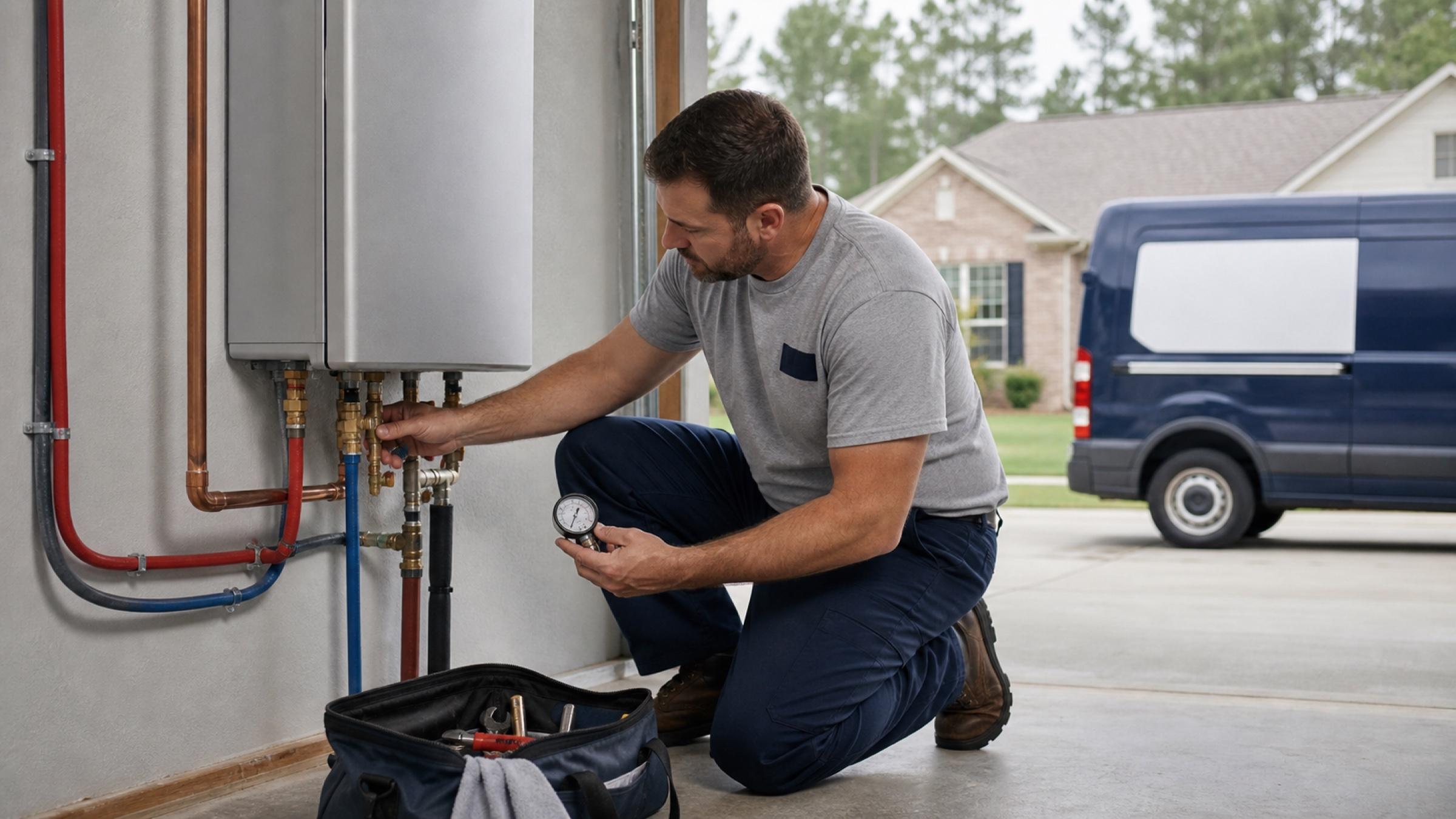
Tank and tankless water heater replacement, sized to the house and brought up to current code, usually in a single day.
$1,600 to $6,500Flat priced, no diagnostic fee
We find leaks inside walls, under slabs and in supply lines, and repair them once located, with 24/7 cover on an active leak.
$220 to $4,800After a $89 diagnostic, waived on approval
Faucets, toilets, sinks, disposals and shower valves fitted at a flat price per fixture, with the shutoff valves replaced as standard.
$185 to $2,400Flat priced, no diagnostic fee
Sump pump repair, replacement and battery backup, with 24/7 cover when a pump has failed and water is rising.
$240 to $3,600After a $89 diagnostic, waived on approval
Replacing the whole supply system in a house whose pipework is failing as a system rather than at a point.
$8,500 to $18,000Quoted on site, free estimate
Gas line repair, pressure testing and new appliance runs, with emergency response around the clock.
$240 to $4,200After a $89 diagnostic, waived on approval
Plumbing is the trade where a slow response turns a small bill into a large one. A dripping supply line behind a wall does not stay a plumbing problem: it becomes drywall, flooring, cabinetry and sometimes framing.
That is why three of our plumbing services are emergency-eligible and covered around the clock: leak detection and repair, sump pump service, and gas line service. Those are the failures where an hour genuinely matters.
The rest, drains that are slow rather than blocked, a water heater that is working but old, a fixture you want changed, are ordinary dispatch-window work and we will book them that way rather than charge you an emergency rate.
Leave the building first. Call the gas utility from outside. Then call us. Do not operate light switches, do not touch any appliance or control, and do not go looking for the source.
Our phone agents flag any report of a gas smell for a person to call you back. Nobody will try to talk you through a diagnosis while you are standing in the house.
The most useful thing you can do before you ever need us is find two things and remember where they are.
The main water shutoff. Usually where the supply enters the house, in a crawlspace, a garage, a basement or a utility closet. On a slab house it is sometimes only at the street meter, which needs a key. Find it now, turn it to check it actually moves, and turn it back. A seized shutoff you discover during a burst pipe is the difference between a wet floor and a flooded house.
The gas shutoff, at the meter outside, and the individual appliance shutoffs.
We will point both out on any visit if you ask, and we would rather spend two minutes on that than take a call from someone standing in rising water who cannot find the valve.
Clay soil and mature trees are why root intrusion in drain lines is so common here, particularly in older neighbourhoods with clay or cast iron laterals. A drain that backs up seasonally rather than randomly is usually roots.
Slab-on-grade construction means many houses have supply lines running in or under the concrete. A leak there is not visible until it shows as a warm spot, an unexplained water bill or damp flooring, which is why leak detection is a real service rather than a formality.
Crawlspaces freeze. Uninsulated pipework in a vented crawlspace is the single most common burst pipe we attend, every January.
We do not work on well pumps, pressure tanks or anything upstream of them. That is a well and pump contractor. Everything downstream of the pressure tank is ours.
We do not do septic systems, tanks or drain fields. That is a licensed septic contractor, and Wake County keeps a list.
We do not do water mitigation or drying after a flood. We stop the water; a restoration contractor dries the house.